

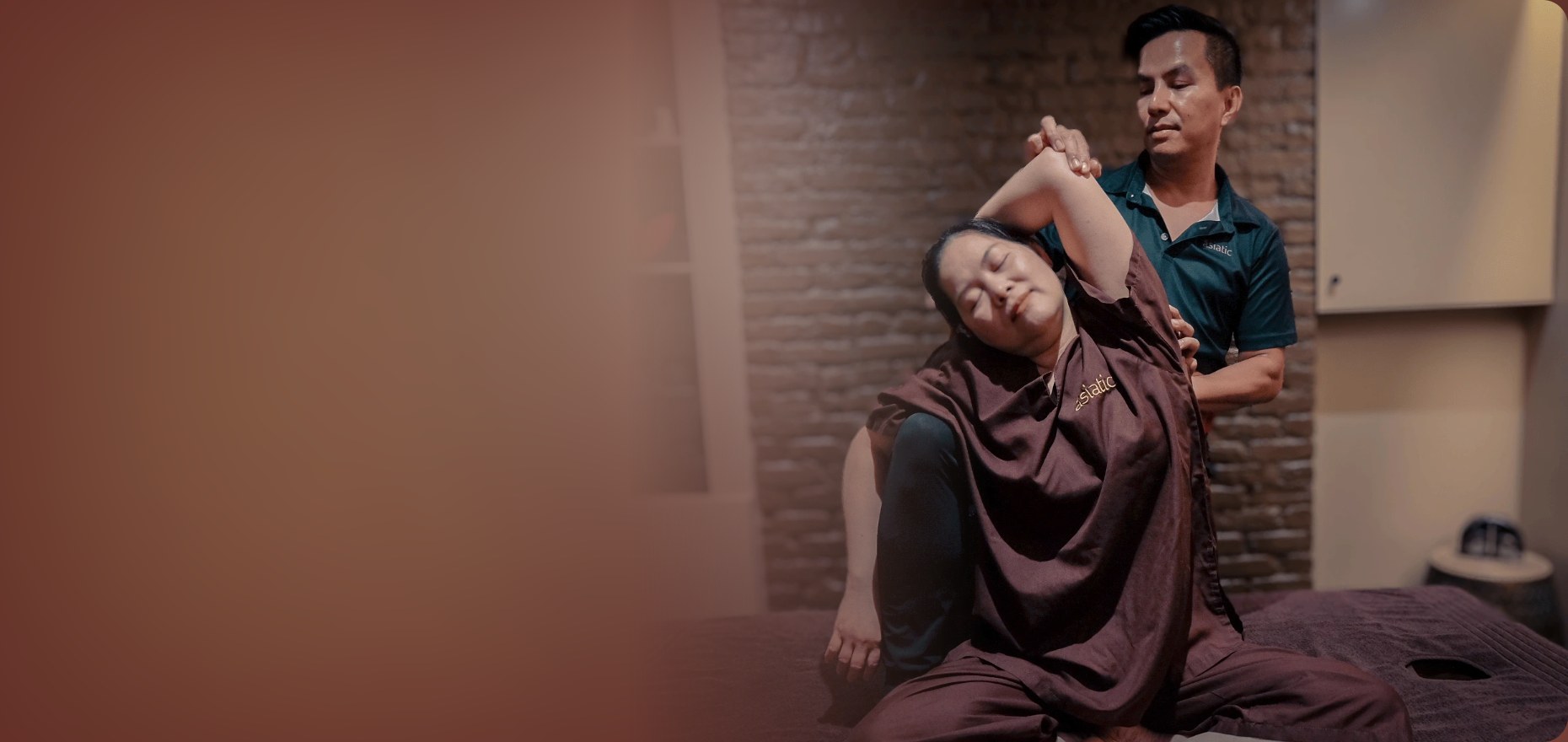
THAI YOGA MASSAGE · LONDON
Thai Yoga Massage
in London
Our Master-Led Thai Yoga Massage uses assisted stretching, rhythmic ompression, acupressure and pressure-based bodywork at our Upper Street studios in Angel and Highbury. This approach has been shaped by Ben Pianese's experience since 2001.
The Art of Assisted Yoga & Movement
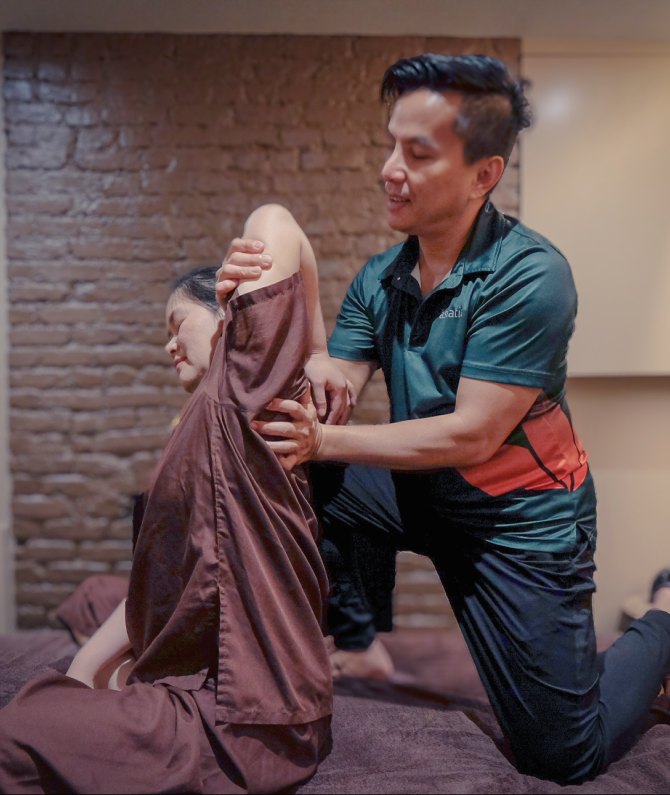
Thai Yoga Massage is a hands-on, movementbased bodywork experience. Sometimes called “lazy yoga”, this traditional Thai bodywork uses assisted stretching, rhythmic compression, pressure and careful positioning of the body.
At Asiatic, sessions are performed fully clothed on a Thai massage table, usually without oil. This allows your massage therapist to guide your body through supported movements, adjusting pressure, pace and stretches to match your comfort and mobility.
You do not need yoga experience or a high level of flexibility. The therapist supports the movement, and the depth of each stretch can be adapted throughout the session.
For people looking for Thai Yoga Massage in London, assisted stretching massage in London or Thai stretching massage in Islington, this fully clothed treatment combines movement, rhythmic compression and pressure-based bodywork at our studios near Angel and Highbury & Islington stations.
A Movement Tradition on Upper Street
Since 2009, Asiatic has grown from its Upper Street beginnings into a place where traditional Thai bodywork and assisted movement fit into modern London life.
Our Thai Yoga Massage reflects this journey. It brings together supported stretching, rhythmic compression and attentive communication, shaped by the care that has earned Asiatic lasting guest trust and Treatwell Top Rated recognition at our Angel and Highbury studios.
Our approach also draws on Northern-style Thai Yoga Massage traditions, including acupressure and work along traditional Sen lines — often described as energy lines. At Asiatic, these principles form part of responsive Thai bodywork rather than a fixed routine. Pressure, movement and technique are adapted to the person receiving the treatment.
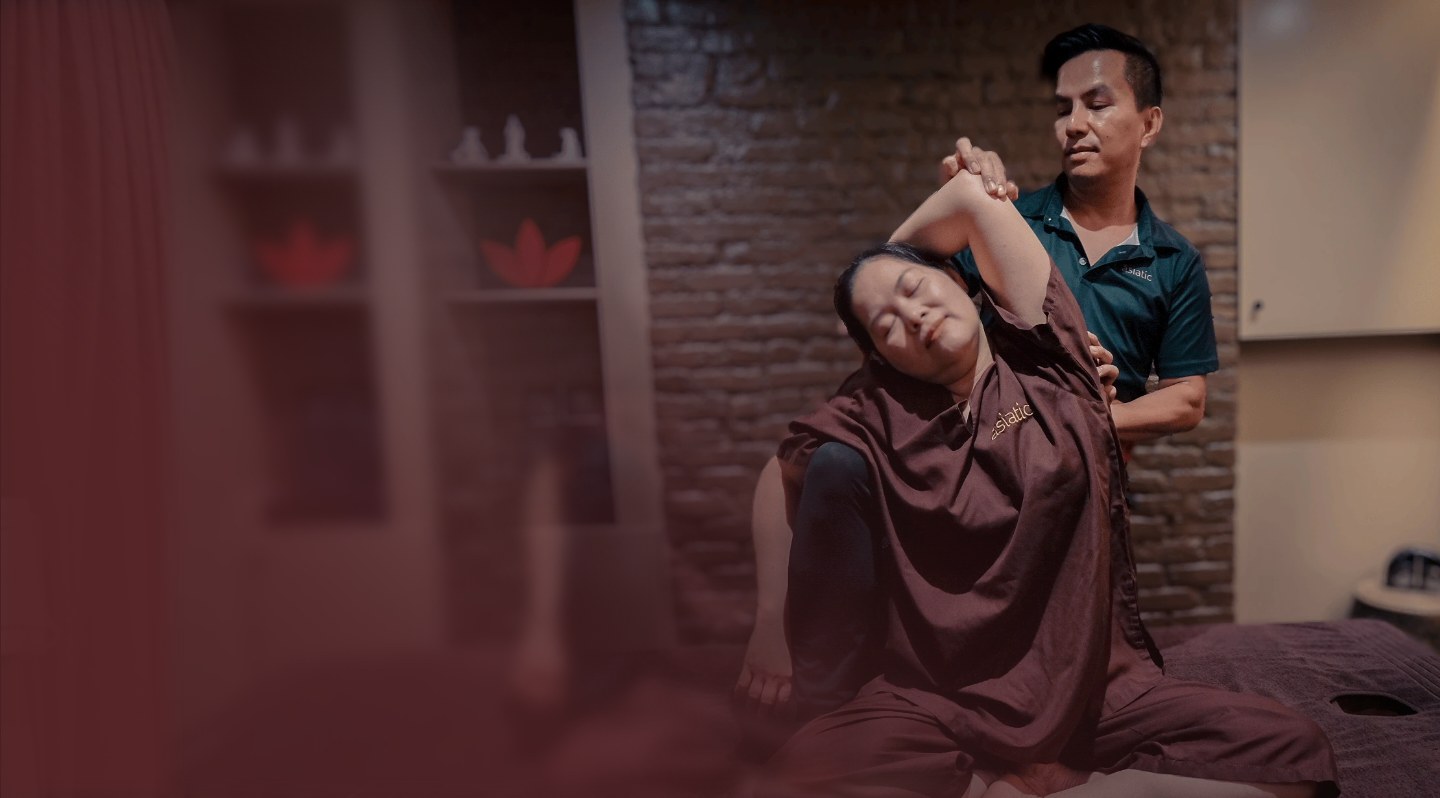
THERAPIST PERSPECTIVE
A treatment that moves with you
Thai Yoga Massage combines stretching, pressure and guided movement in one session. Because each movement can be adapted as your body responds, the treatment can feel both freeing and deeply relaxing while allowing the therapist to work with the body as a whole.
Meet Our Therapistsbenefits
The Benefits of Thai Yoga Massage
1
Move freely
Full-body assisted stretching to help the body feel longer, freer and more at ease.
2
Slow down
A slower rhythm of movement, pressure and breath to encourage calm and deeper relaxation.
3
Feel settled
Movement-based bodywork designed to help you feel grounded, refreshed and more connected to your body.
Assisted Stretching, Postural Awareness and Mobility
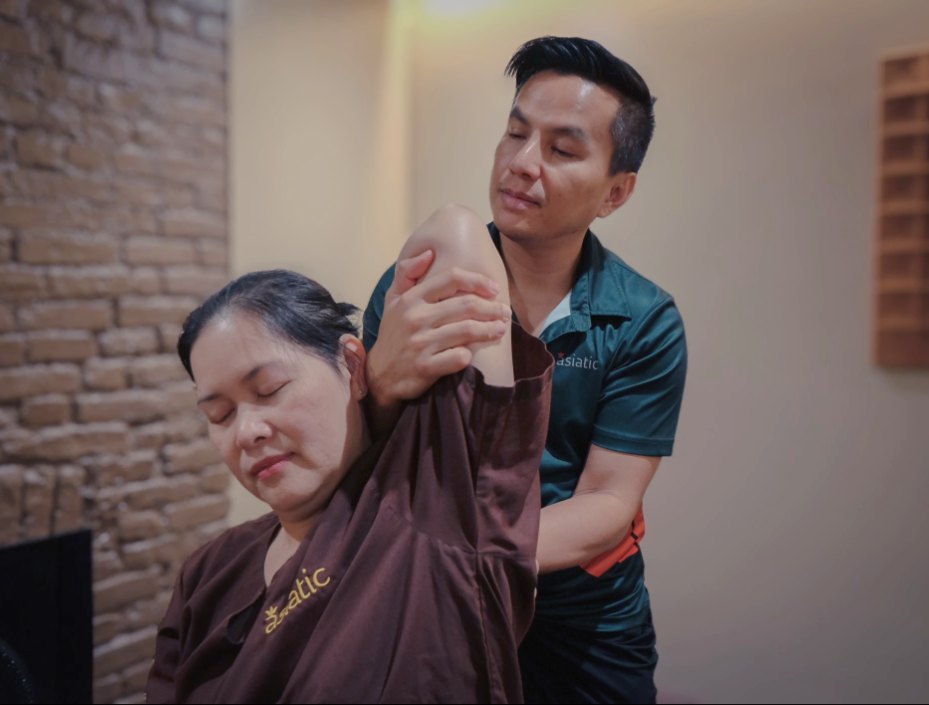
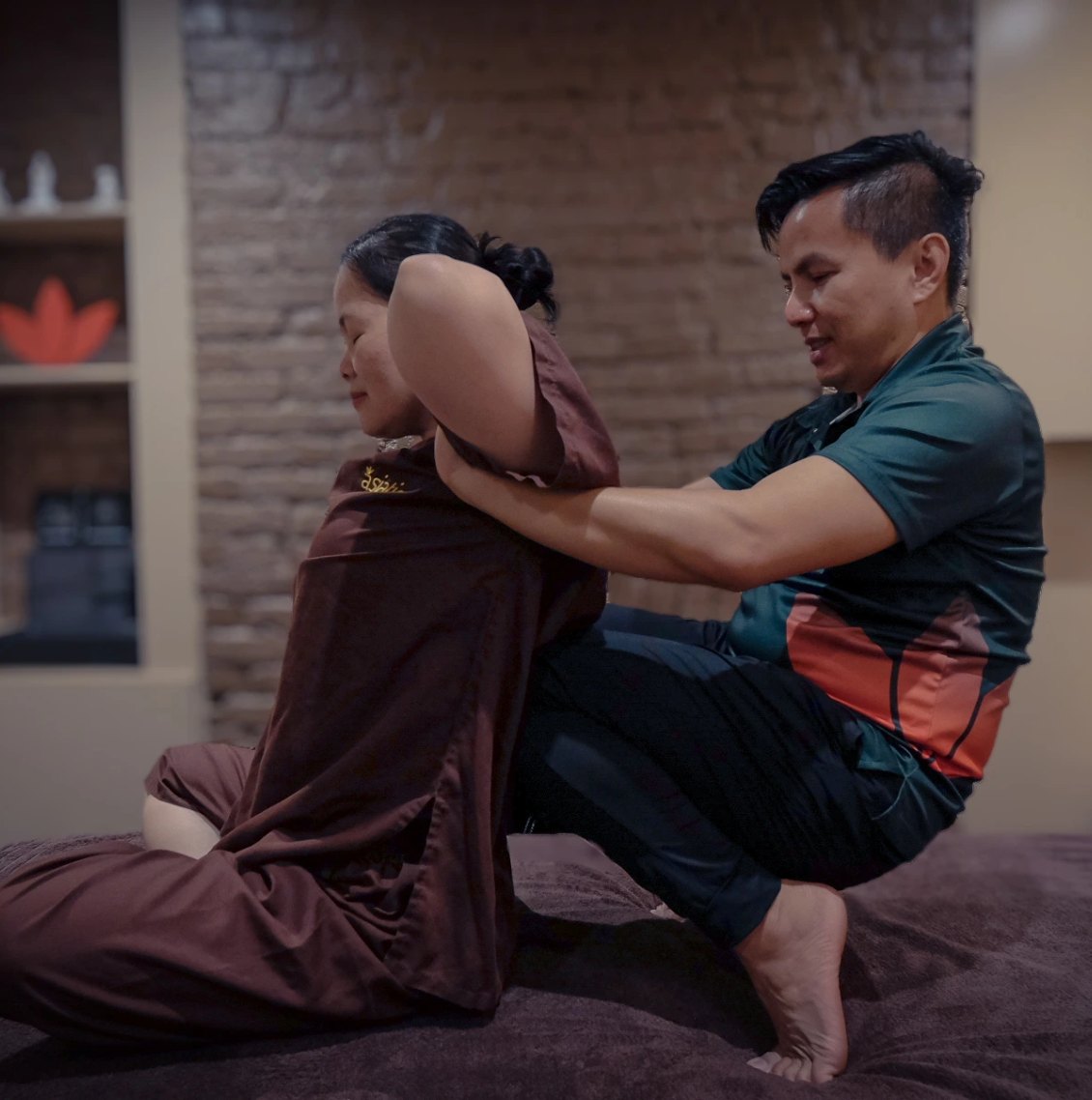
Thai Yoga Massage focuses on movement more than most oil-based massage styles. Your therapist may use their hands, elbows, knees or feet to apply steady pressure, rhythmic compression and assisted stretching.
Acupressure and traditional Sen line work may also form part of the session, depending on the practitioner, your comfort and the focus of the treatment.
Each session is tailored to your comfort, mobility and the reason for your visit. Some guests come for Thai Yoga Massage after desk work, commuting, training or long periods of sitting. Others enjoy it as a slower, full-body session that helps them feel more open and relaxed.
For office workers, runners and people who train regularly, Thai Yoga Massage provides movement-focused bodywork with a strong focus on assisted stretching, careful body positioning and postural awareness.

Asiatic:
The Master-Led Perspective
Thai Yoga Massage is not simply a passive treatment. It is a guided bodywork experience defined by pressure, rhythm, movement and communication.
Unlike deep tissue massage, which often uses firmer, targeted pressure, Thai Yoga Massage uses assisted stretching, compression and supported positions. The aim is to help the body feel more spacious, mobile and at ease without pushing movement beyond your comfort.
At Asiatic, we call this Master-Led craftsmanship™. It means clear communication, careful observation and respect for how your body feels each day.
Traditional Sen line work forms part of the Thai Yoga Massage framework. At Asiatic, it is used as one of several traditional principles that may inform how pressure and movement are applied during a session.
Thai Yoga Massage in London
Assisted stretching, mindful movement and traditional Thai bodywork
for a deeper fullbody reset.
Thai Yoga Massage vs Other Massage Styles
Thai Yoga
assisted movement + stretching
Traditional Thai
pressure + movement + stretching
Deep Tissue
slower oil-based focused pressure
How Thai Yoga Massage Works
No experience required
Thai Yoga Massage is often called passive yoga. It is ideal for people who want supported movement without having to perform yoga themselves.
Your massage therapist applies steady pressure, rhythmic compression and assisted stretching while guiding your body through supported positions. Traditional Sen line work may also be incorporated into the treatment.
The session can be adapted for active guests, runners, people who train regularly or those experiencing general muscle tension from daily life. Because the therapist guides the movement, you do not need any previous yoga experience. Sessions can range from focused work to slower, full-body assisted stretching, depending on your needs and the time you book.
Instead of following a fixed routine, your massage therapist tailors the session to your comfort, mobility and reason for visiting. The treatment may feel deep at times, but it should never feel overwhelming. Please share your feedback during the session so pressure, stretch and pace can be adjusted.

Looking for Traditional
Thai Massage?
Explore our classic Thai Massage treatment in Angel and Highbury.
What to Expect: Your First Visit to Asiatic
When you arrive at our Islington massage boutique, your therapist will ask about tension, pressure preferences, comfort and mobility to tailor the session to you.
Your massage takes place on a Thai massage table while you remain fully dressed in comfortable clothing. The session may include rhythmic movements, focused pressure, acupressure and gentle stretching.
Your practitioner will guide and support any movements, including traditional Sen Line work and Northern-style Thai Yoga Massage techniques.
You may feel a pleasant intensity during deeper stretches. Your therapist will adjust the pressure and movement based on your comfort. Afterwards, take some time to relax and drink water before returning to your day.
General wellbeing note
Thai Yoga Massage is offered for relaxation, mobility, body awareness and general wellbeing. References to Sen or energy lines describe concepts within traditional Thai bodywork and are not medical explanations of symptoms. Thai Yoga Massage does not replace medical advice, diagnosis, physiotherapy or treatment from a qualified healthcare professional.
Helpful answers. A thoughtful gift.
Choosing and booking your experience
What should I expect from Thai Yoga Massage?
You can expect a professional, movement-based bodywork session. It is fully clothed, uses no oil, and is usually performed on a padded mat. Your therapist will use assisted stretching, rhythmic compression, and careful body positioning adapted to your comfort and mobility.
How does Thai Yoga Massage differ from deep tissue massage?
Thai Yoga Massage focuses on assisted stretching, rhythmic pressure, and supported movement without oil. Deep tissue massage is usually oil-based and applies firmer, more localised pressure to areas of muscle tension.
Where can I book Thai Yoga Massage near Angel or Highbury?
You can book Thai Yoga Massage at Asiatic Angel, 93 Upper Street near Angel station, or Asiatic Highbury, 262 Upper Street near Highbury & Islington station. Both studios offer the same Master-Led™ approach.
→ Book Thai Yoga Massage at Angel
→ Book Thai Yoga Massage at Highbury
What should I wear for Thai Yoga Massage?
We recommend wearing loose, comfortable clothing that allows easy movement, such as gym or yoga-style clothes. Thai Yoga Massage is usually performed fully clothed and does not use oil.
How often should I book Thai Yoga massage?
This depends on your body, lifestyle and reason for visiting. Some guests book Thai Yoga Massage occasionally as a full-body reset, while others visit more regularly as part of their self-care routine. Your therapist can suggest a suitable rhythm based on your comfort, mobility and treatment preference.
How does Thai Yoga Massage differ from Thai massage?
Traditional Thai massage and Thai Yoga Massage are closely connected, but Thai Yoga Massage places a stronger emphasis on assisted stretching, supported movement and careful body positioning. Traditional Thai massage may include stretching, too, but it is usually more pressure-based, with rhythmic compression and broader bodywork.
What is your cancellation policy for Thai Yoga Massage?
We ask for at least 24 hours’ notice if you need to cancel or reschedule your appointment. Please check your booking confirmation for the full cancellation terms attached to your appointment.
Is Thai Yoga Massage helpful for desk-work tension?
Thai Yoga Massage may suit guests experiencing neck, shoulder, back, or hip tension from desk work, commuting, or prolonged sitting. Your therapist can adapt the session to your comfort and focus areas.
Is Thai Yoga Massage suitable for someone who is not flexible?
Yes. You do not need to be flexible. Your therapist will adapt the assisted stretching, pressure, and pace to your comfort, mobility, and the reason for your visit.
Is Thai Yoga Massage the same as lazy yoga?
Thai Yoga Massage is sometimes called lazy yoga because your therapist guides your body through supported stretches and positions while you remain relaxed. You do not need to do yoga yourself.
What should I do after Thai Yoga Massage?
After your session, we recommend drinking water and giving your body time to settle before returning to a busy schedule. If possible, avoid intense exercise immediately afterwards and notice how your body feels over the next day or two.
Is Thai Yoga Massage suitable for everyone?
Thai Yoga Massage is adapted to the individual, but it may not be suitable for everyone. If you are pregnant, recovering from surgery, have a recent injury or have a medical condition, please seek professional medical advice before booking and let our reception team know before your appointment.
Can Thai Yoga Massage support active guests and runners?
Thai Yoga Massage may suit active guests, runners, and people who train regularly, especially those seeking movement-based bodywork with assisted stretching and rhythmic compression. Your therapist will adapt the session to your comfort, mobility and reason for visiting.
What is the difference between stretching and Thai Yoga Massage?
Thai Yoga Massage includes assisted stretching, but it is not simply a stretching session. Your therapist also uses rhythmic compression, pressure-based bodywork and supported positions, adapting the session to your comfort, mobility and reason for visiting.